
Withering Realms Four-Arm Combat
Primary, secondary, tools, flasks, and the catalyst — four arms that fire on their own.
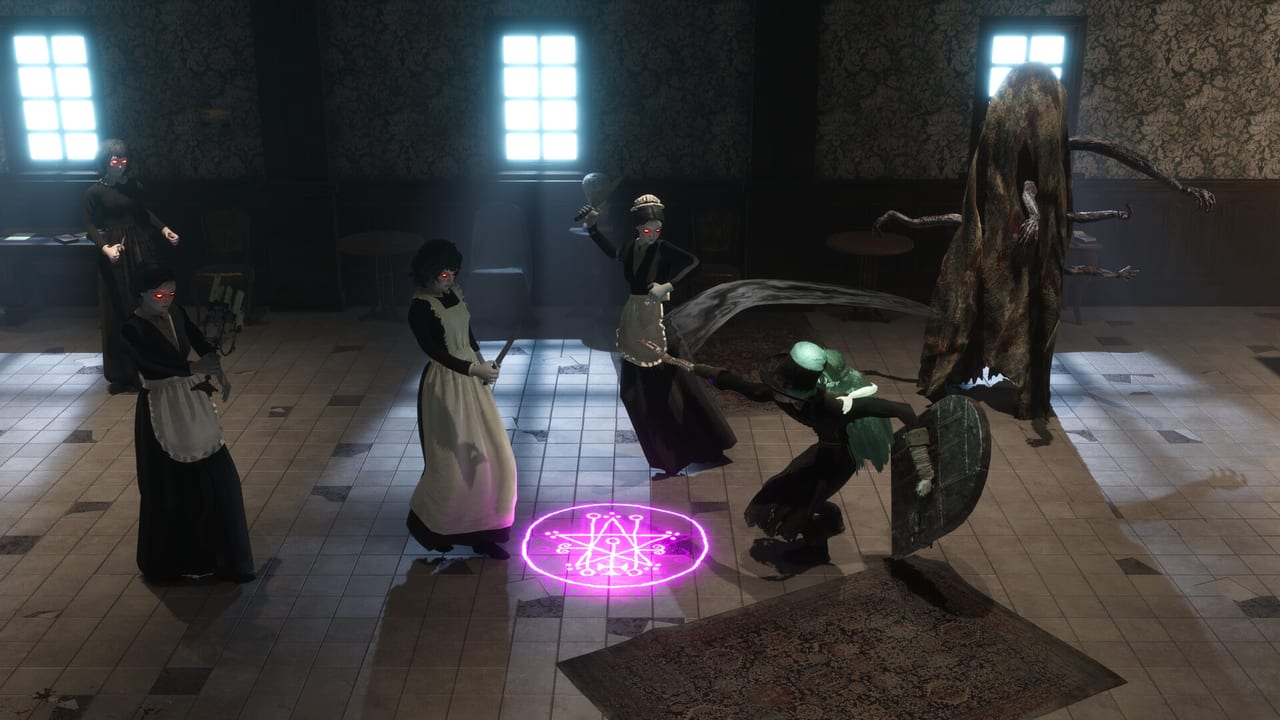
Combat in Withering Realms is a spacing problem wearing a horror coat. You pilot a two-metre doll while Clover, a nine-year-old ghost, sits inside it. Four arms act independently. If you treat the doll like a character with one attack button, Saintswood will punish you. If you treat each limb as a job, even the first two bosses become readable. This page is the mechanical spine for the Early Access build on 2 September 2026. Withering Realms is single-player. It is not a roguelike: some rooms shuffle on entry, but death does not wipe items, crafts, or story.
Bind the four arms before you argue about weapons. The controls guide explains why a DualShock or DualSense is the better default. First-hour habits live in Getting Started. Ranked crafts live on the weapon ranking and the build planner. Night changes the same fights; read night cycle before you assume a day clear is finished.
The four arms
The doll is missing its right arm. That socket takes crafted weapons. Each weapon has a primary attack and a secondary attack. On melee crafts, primary is a light combo. Secondary is a heavier combo that carries the doll forward. That forward step is both damage and movement. Use it to close a gap you already measured. Do not use it as a panic button into a scarecrow you have not identified. Named right-arm examples in Early Access include the Pivoting Greatsword, Chain Rock, Machinegun, Flamethrower, and Enchanted Candelabrum. About fifty weapons and tools ship in the Early Access build; you will not craft all of them, and you should not try in Beynon House.
The doll’s left hand is utility: shields, pistols, and other tools that keep you alive or poke from a safer line. These are not the main damage socket. They are how you refuse a hit or threaten a flinch while the right arm recovers. Clover’s left hand holds consumables such as flasks and grenades. Spend them on purpose. A flask that saves a boss attempt is cheaper than a flask you popped because the trigger sat next to the catalyst.
Clover’s right hand holds a spell catalyst. It fires quickly and enhances the doll. The catalyst is not a replacement for the right-arm craft. It is a buff, a poke, and a way to keep pressure while the doll’s heavier string recovers. If you mash catalyst because it feels fast, you will starve the enhancement and still lose the spacing war. Feed it in the gaps. Let the doll’s right arm be the sentence and the catalyst be the comma.
Spacing, not stat checks
The camera is 3/4 top-down. You see more floor than a first-person horror game, which means you are responsible for the floor. Walk in arcs. Stop before a secondary melee so the lunge lands on a body, not on a wall. Machinegun and Flamethrower still need distance discipline; a stream of fire that kisses the doll’s own feet is a wasted craft. Chain Rock wants a line. Pivoting Greatsword wants a commit. Enchanted Candelabrum is still a weapon, not a lantern with opinions: if you brought it for light, you still have to swing it like you mean the hit.
Night is pitch black with physical lighting. Clover’s faint glow is visible after dark and washed out by day. A loadout that felt loud in Beynon House can feel blind in Saintswood at night. Bring a light you can place, not only a brighter thought. Perimeter guardians and later optional routes will test whether you can fight without seeing the whole arena. The bosses guide covers those patterns without inventing later names.
Talismans and what you cannot tweak
Talismans slot onto limbs. They boost damage or reduce resource use. Four body talismans add protection or retrigger arm talismans when conditions are met. Read the condition. A retrigger that never fires is a wasted slot. Early Access lists about seventy talismans; compare families on the talismans ranking rather than slotting the first drop that says damage.
Tools themselves are not customizable once crafted. You need resources to make another. That is why the repair shop in Penwyll exists, and why Getting Started tells you not to visit it empty-handed. Replacement eyeballs show up as shop upgrades. Body, left arm, and right arm level separately. A right-arm specialist with a hollow body will die to the first grab that ignores your secondary. A tank body with a neglected right arm will tickle a guardian for three minutes and still lose the map lock.
When to press what
Open with the doll’s left-hand tool if you do not know the enemy. A shield or pistol answer is information. Commit the right-arm primary when the enemy has finished a tell you can see. Spend the secondary when you have already won the step and want the doll to occupy that space. Tap the catalyst to enhance the doll during the recovery, not instead of the recovery. Throw a flask or grenade when the arena is about to add a second body, not when you are already overlapping the first.
If a fight is a puzzle with a timer, you are probably in an Althea section or a house puzzle, not a Saintswood brawl. Althea uses interrogation, lockpicking, and forgery, and her cameras sit still like classic survival horror. Do not import doll combos into those rooms. Her notes live on the characters hub. For the doll, the opening walkthrough is the place to practise the loop on real enemies before you spend rare parts.
A clean combat session is one Saintswood loop where you never mash all four arms at once. Practise the secondary melee until the forward step is a choice. Practise the catalyst until it is a garnish. Practise the flask until you still have one at the fog. Then, and only then, open the build planner and spend the parts. The doll is a machine with a missing arm. Combat is how you teach that machine to walk toward the thing that wants you dead, and stop one pace short.
Frequently Asked Questions
Quick answers for Penwyll, the doll, and Early Access.
How do the four arms work?
Doll right: crafted weapons with primary and secondary. Doll left: utility such as shields and pistols. Clover left: flasks and grenades. Clover right: a quick spell catalyst that enhances the doll.
What is the difference between primary and secondary melee?
Primary is a light combo. Secondary is a heavier combo that carries the doll forward. Treat the secondary as a step you already measured, not a panic button.
When should I use the catalyst instead of a flask?
The catalyst is a fast enhance and poke. Flasks and grenades are consumables for emergencies or extra bodies. Do not spend a flask because it shares a panic key with the catalyst; rebind in controls if that happens.
Can I customize a tool after I craft it?
No. Tools are not customizable once crafted. Spend resources to make another. Talismans slot onto limbs to raise damage or cut resource use; four body talismans protect or retrigger arm talismans.
Is combat different at night?
Yes. Night is pitch black with physical lighting, and Clover's glow is easier to see. Read the night cycle guide before you reuse a day loadout on a perimeter guardian.
Where should I rank weapons and talismans?
Start with the weapon ranking, then lock a plan on the build page and the talismans ranking.