
Withering Realms Best Early Access builds
Four doll archetypes, three level tracks, and no pretend party comps.
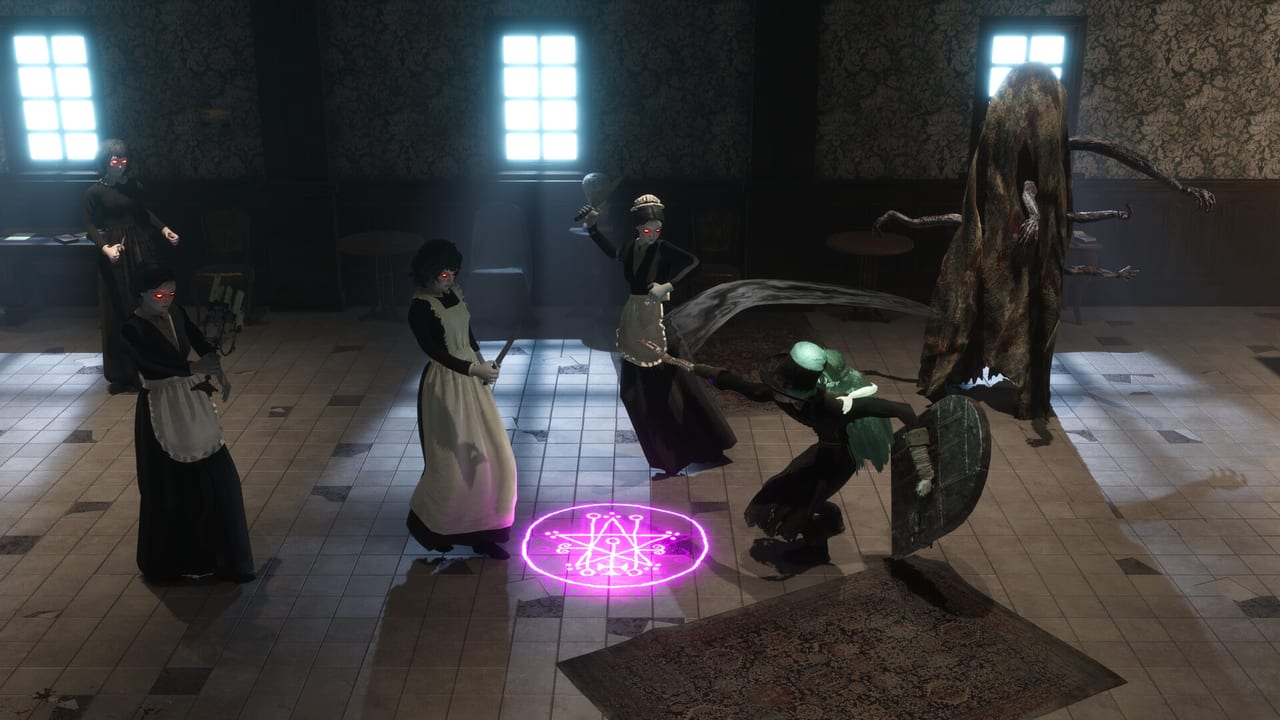
A build in Withering Realms is not a party of heroes. It is one two-metre doll, one nine-year-old ghost, three level tracks, a locked right-arm socket, a left-arm tool, and a handful of talismans. Steam Early Access is dated 2 September 2026. Numbers will move. The shapes below will not, because they come from how the hands actually work rather than from a patch-day spreadsheet. Use them as starting archetypes, then argue with the weapon ranking and the talisman guide when your dungeon disagrees.
You level the body, the left arm, and the right arm separately. That sentence is the whole skill tree. Body is staying alive and occupying space. Right arm is the named craft you cannot retune. Left arm is shields, pistols, and utility. Clover’s catalyst (right hand) and consumables (left hand) fire while the doll is already in an animation. If your “best build” ignores the ghost, it is a mannequin, not a kit. Read the doll page and the combat guide before you spend the first cluster of levels.
Heavy melee — Pivoting Greatsword
This is the default honest kit. Craft the Pivoting Greatsword into the missing right arm. Put a shield or a short utility tool in the left. Level the body early so the two-metre frame can take a mistake while the secondary heavy combo carries you forward. Level the right arm second so the light combo and the carry actually hurt. Leave the left arm only high enough that the shield is not a toy.
Talismans: damage on the greatsword limb, protection on the body until you understand a retrigger condition by name. Clover’s job is to heal or drop a consumable during the swing, then to use the catalyst as punctuation, not as the main weapon. This archetype wins single-target exams — perimeter guardians, lonely elites, any fight that looks like a duel in a hallway. It is merely fine in packed tombs unless Chain Rock is your second craft.
Spend this way if your deaths look like “I bounced off one heavy body” or “I got clipped while committing.” Do not spend this way if you have never blocked and you think a bigger sword will delete the need to space. The greatsword is a spacing tool that happens to be a blade.
Chain and crowd — Chain Rock
Craft Chain Rock when your footage is full of extra limbs. Level the right arm first so the chain can keep working. Level the body second because packed rooms still hit you. Left arm can be a pistol for the straggler you do not want to chase, or a shield if you keep eating the first lunge. Economy talismans on the chain limb are the build; damage talismans are the luxury. A retrigger body that fires on pack conditions is the greedy version. A protection body is the version that finishes the dungeon.
Clover should throw the consumable into the clump while the doll occupies it. Catalyst use is for the elite inside the clump, not for the trash the chain already owns. This archetype is the reason crowd control has its own column on the weapon page. Seven dungeons and 110 monsters are not flavour text. If you insist on the greatsword in a room that wants a chain, you are not “sticking to melee.” You are refusing the job.
Night revisits can flip this kit from comfortable to necessary. New creatures in old streets like to arrive in numbers. Keep the chain even if you also love the blade. The socket is not a marriage, but the materials are not free, so plan the second craft instead of impulse-buying a gun you will not feed.
Gun and flame — Machinegun or Flamethrower
These are two lanes that share a philosophy: the doll holds a line instead of occupying a body. Machinegun wants a cleaner single-target stream and a magazine you actually fund. Flamethrower wants a cone, a doorway, and fuel. In both cases, economy talismans on the right arm come before damage. A thirsty A-tier tool is a B-tier death. Left arm is often a shield because you are standing still enough to be punished. Pistol-on-pistol (left gun plus right machinegun) is a statement that you will never enter melee on purpose; only do that if the combat loop already feels readable at range.
Level the right arm first. Level the body enough that a grab does not end the experiment. Left arm can wait unless the shield is your actual personality. Clover’s catalyst is how you cover reload, cone downtime, or the target that stepped outside the fire. Consumables are not optional here; a ranged doll that never uses the ghost’s left hand is playing with two arms instead of four.
Pick flame if your map is tombs, halls, and night interiors. Pick the machinegun if you keep fighting across fields and want a line on a guardian. Do not pick both in the first week unless materials are genuinely overflowing. Fifty weapons and tools exist in the long run. You still have one right socket at a time.
Catalyst-support — Clover first, doll second
This is the archetype people skip because the trailer shows a giant body. Clover rides on the doll’s back and can cast or item at any time, including mid-swing. A catalyst-support build treats that fact as the point. The right-arm craft can be the Enchanted Candelabrum if you are here for night routes and readable rooms, or a modest melee socket if you still want the doll to occupy space while the ghost does the interesting work. Left arm stays utility. Body levels come first because Clover cannot spend a spell if the doll is on the floor. Right-arm levels can wait. Limb talismans that cut resource use on whatever the doll is doing keep the animation available; damage limbs are secondary. Protection body talismans are the default. Retrigger is only for players who can describe the condition while also watching Clover’s hands.
This kit shines when a puzzle, a dark estate, or an Althea-adjacent night job is the real content. It is a poor raid-boss fantasy, and there is no raid. It is also the kit that makes the Clover page feel like a character guide instead of flavour. If you never press the catalyst, you are not playing a support build. You are playing a doll with a backpack.
Spending the three tracks without lying to yourself
Ask which animation is failing. If you die during a committed swing, the body is low or the left arm has no shield. If the tool peters out, the right arm is low or the limb charm is damage on a hungry weapon. If you have resources and still lose, Clover is idle. Respec dreams are less important than not dumping ten levels into the wrong track because a letter grade on the Builds Hub looked loud.
Penwyll’s repair shop is where these decisions become metal. Shops, Clocktower, and Mazechapel are where you notice you cannot afford a second socket yet. Perimeter guardians are the exam that tells you whether you built for a crowd or a single body. The opening walkthrough will not finish that exam for you. It will only get you into town with enough context to spend badly or well.
English is the Early Access language. Extra languages and consoles belong to the 2027 1.0 plan. Do not stall a build waiting for a localisation pass or a couch-session rumour. The game is single-player. The doll is one body.
Pick one archetype for the next dungeon, not four. Three upgrade tracks will not fund a closet of simultaneous fantasies. Craft the socket that matches the deaths you are already having, charm the limb that matches that socket’s hunger, and let Clover’s hands work while the wood and metal are still moving.
Frequently Asked Questions
Quick answers for Penwyll, the doll, and Early Access.
What is the best starter build?
Heavy melee with the Pivoting Greatsword, a left-hand shield, body levels first, and a damage limb on the right arm. It is the most forgiving spacing kit. Switch to Chain Rock if packed rooms are killing you. See the weapon ranking for the working letters.
Should I level body or arms first?
Level the track that matches the failure. Body if you die during animations. Right arm if the socket feels weak or hungry. Left arm if the shield or pistol is the actual plan. The doll page explains the three tracks.
Is there a party build for two players?
No. Withering Realms is single-player. Clover, the doll, and later Althea’s sections are campaign roles, not a squad you compose. Builds describe one kit.
When do I switch to a catalyst-support kit?
When night interiors, lighting, and Clover’s spells are the content you are actually failing, not when a trailer made the ghost look decorative. Pair that decision with the night cycle and the Clover profile.
How often will these archetypes change?
The four shapes should survive number tweaks. The talisman pairs inside them will not. Recheck the talisman guide and Early Access notes after balance passes instead of cloning a week-one screenshot.